WELCOME TO STRONTIUM FOR BONES BLOG
Have you experienced or read about negative, and even dangerous, side effects from Fosamax (alendronate), Boniva (ibandronate), Actonel (risedronate), and other bisphosphonates prescribed for osteoporosis? If you have, then rest assured there is a safe, effective treatment for this condition. Strontium, primarily in the form of strontium citrate, is taken orally once a day. Studies have shown the bones it rebuilds may be stronger than those rebuilt by the bisphosphonates.
My blog offers visitors useful posts, which you may reply to, information concerning the use of strontium for osteoporosis, and an extensive link library of references. Your participation in occasional polls is welcome.
All comments to my posts are moderated by me.
My blog offers visitors useful posts, which you may reply to, information concerning the use of strontium for osteoporosis, and an extensive link library of references. Your participation in occasional polls is welcome.
All comments to my posts are moderated by me.
Monday, April 29, 2013
EMA Confirms Recommendations to Restrict Strontium Ranelate
The European Medicines Agency (EMA) has confirmed the recommendations to restrict the use of strontium ranelate (Protelos/Osseor, Servier) due to concerns about the risk of adverse
cardiac events. The EMA's Pharmacovigilance Risk Assessment
Committee (PRAC) recommended the restrictions earlier this month, and the
Committee for Medicinal Products for Human Use (CHMP) has now endorsed these following its meeting of April 22-25, 2013. The
CHMP opinion will be sent to the European Commission, the executive branch of
the European Union, which will issue a legally binding decision.
Labels:
adverse cardiac events,
EMA,
Osseor,
Protelos,
Servier,
strontium ranelate
Tuesday, April 23, 2013
Strontium and Your Heart
A committee of the European Medicines Agency (EMA) has
recommended the following restrictions in the use of strontium ranelate (sold
in the European Union under the brand names Protelos and Osseor) to reduce the
risk of adverse cardiac events:
1a. Strontium ranelate should only be used for the treatment
of severe osteoporosis in postmenopausal women at high risk for fracture and
severe osteoporosis in men at increased risk for fracture.
2a.Strontium ranelate should not be used in patients with
current or past history of ischemic heart disease (such as angina or MI),
peripheral arterial disease (PAD), or cerebrovascular disease.
3a.Strontium ranelate should not be used in patients with
hypertension that is not controlled by treatment.
What, if anything,
should those of us taking strontium citrate do?
Here is what I think.
1b. Strontium citrate can be used as a supplement by men and
women with osteopenia or osteoporosis. (I believe the first restriction on
strontium ranelate is mostly for cost containment because bisphosphonates,
especially the generic equivalents, are much cheaper than strontium ranelate.)
2b. Strontium citrate can be used UNDER MEDICAL SUPERVISION
in patients with current or past history of ischemic heart disease, PAD, or
cerebrovascular disease.
3b. Strontium citrate should not be used in patients with uncontrolled
hypertension. Patients must get their hypertension under control by medication.
Strontium citrate can be used UNDER MEDICAL SUPERVISION in patients with
hypertension that is controlled by treatment.
Tuesday, February 12, 2013
Vitamin D Supplements and USP Verification
Vitamin D supplement potency varies widely, and the amount of vitamin D in
over-the-counter and compounded supplements does not necessarily match the
amount listed on the label, according to a research letter published February
11, 2013, in the journal JAMA Internal Medicine.
The analysis showed that the amount of vitamin D in these supplements
ranged from 9 percent to 146 percent of the amount listed on the label. Not
only was there variation among different brands and manufacturers, but also
among different pills from the same bottle. The researchers were surprised by
the variation in potency among these vitamin D pills. The greatest concern is that
individuals with low levels of vitamin D in their blood and consistently taking
a supplement with little vitamin D in it, could face health consequences.
The U.S. Food and Drug Administration (FDA) is considering new safety guidelines
for some supplements, but, for the most part, the industry remains unregulated.
Some manufacturers participate in a voluntary quality verification program
operated by the U.S. Pharmacopeial Convention (USP) — an independent, nonprofit
organization that sets public standards for the quality of dietary supplements.
In order to receive the USP verification mark, manufacturers' facilities
undergo annual good manufacturing-practice audits, and their products are
tested for quality, potency and purity. Dr. LeBlanc and her colleagues included
one supplement from a USP Verified manufacturer in their sample. They found the
amount of vitamin D in pills from that bottle was generally more accurate than
the other bottles tested.
"The USP verification mark may give consumers some reassurance that
the amount of vitamin D in those pills is close to the amount listed on the
label," said Erin S. LeBlanc, MD, MPH, lead author and investigator with
the Kaiser Permanente Center for Health Research in Portland, Oregon.
"There are not many manufacturers that have the USP mark, but it may be
worth the extra effort to look for it."
The researchers tested 55 bottles of over-the-counter vitamin D from 12
different manufacturers. The over-the-counter vitamin D pills used in the
analysis were purchased at five different stores in Portland, Oregon. The
compounded vitamin D was made by a compounding pharmacy in Portland. The
analysis was conducted by Eagle Analytical Services, an independent lab in
Houston.
USP Verified Dietary Supplements
Click
on the brand names below to see a list of USP Verified products and a list of
the retail stores where you can buy the products.
Note: I use Nature Made Multi For
Her 50+, a multivitamin that contains 1000 IU vitamin D3. There are also several
Nature Made vitamin D supplements: Vitamin
D—400 IU, Vitamin D3 1000 IU Softgels, Vitamin D3 2000 IU Softgels, and Vitamin
D3 5000 IU Softgels. This brand is carried at several brick-and-mortar stores.
I buy mine online at www.iherb.com. If you
use my code, KAP600, at checkout, you and I both get a discount.
Labels:
FDA,
labeling accuracy,
potency,
USP verification,
vitamin D,
vitamin D3
Friday, November 23, 2012
Hip Fracture Risk and Antihypertensive Drugs
Are you taking strontium citrate or one of the osteoporosis medications to increase your BMD and decrease your bone fracture risk? Here is something else to consider if you are at least 66 years of age.
Initiating antihypertensive drugs in the elderly has been associated with an immediate increased risk of falls. The most likely mechanism is orthostatic hypotension, which is associated with dizziness and fainting. The effect is acute, occurs over a relatively short time, and may lead to falls, some of which can result in hip fractures.
The following study was undertaken to determine whether
initiation of antihypertensive drugs (e.g., thiazide diuretics, angiotensin II
converting–enzyme inhibitors, angiotensin II receptor blockers, calcium channel
blockers, or β-adrenergic blockers) was associated with an immediate increased
risk of hip fractures. Health care
administrative databases were used to identify patients initiating an
antihypertensive drug in Ontario, Canada. Elderly people who began receiving an antihypertensive
drug had a 43% increased risk of having a hip fracture during the first 45 days
following treatment initiation.
Tuesday, November 20, 2012
This blog www.strontiumforbones.com has a link on facebook. You can post questions or comments on my blog or on my facebook page at http://www.facebook.com/?sk=welcome#!/pages/Strontium-for-Osteoporosis/462179087156676. I hope to hear from you soon! You have to sign in to use facebook, but it is free and simple.
Labels:
bones,
facebook,
osteoporosis,
strontium
Tuesday, October 9, 2012
Case Study on Strontium Citrate for Osteoporosis with Fragility Fractures
Sara S. DeHart, MSN, Ph.D., is an 80-year-old woman who was diagnosed with osteopenia at age 63. She was treated initially with Fosamax 10 mg. daily and Estraderm patches twice weekly. She discontinued the patches after about two
years, and Fosamax after about three years. Following a fragility fracture of
the sacrum, she was prescribed Actonel 5 mg five times a week. Her vitamin D
blood level was found to be very low, although she had supplemented with 400 IU vitamin D3 throughout her adult life.
She followed “standards of care” medical
recommendations until she developed a second fragility fracture at T9 while
taking Actonel. At that point, she stopped using Actonel and began taking strontium citrate. She increased her vitamin D3
supplementation. Today, she is 80 years old and her BMD is normal. More
importantly, she has not fractured, even after a recent fall onto an asphalt
driveway! Follow this link to read her amazing story:
Labels:
Actonel,
BMD,
Fosamax,
fragility fractures,
Strontium citrate,
vitamin D3
Subscribe to:
Posts (Atom)
How Strontium Builds Bones
Strontium is a mineral that tends to accumulate in bone. Studies have shown that oral doses of strontium are a safe and effective way to prevent and reverse osteoporosis. Doses of 680 mg per day appear to be optimal. See my "For More Information About Strontium" links section.
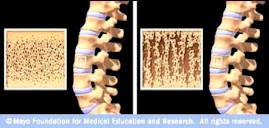
Osteoporosis is caused by changes in bone production. In healthy young bones there is a constant cycle of new bone growth and bone removal. With age, more bone is removed and less new bone is produced. The bones become less dense and thus more fragile.
Scientists believe that strontium works in two ways. It may stimulate the replication of pre-osteoblasts, leading to an increase in osteoblasts (cells that build bone). Strontium also directly inhibits the activity of osteoclasts (cells that break down bone). The result is stronger bones.
When taking strontium, be sure to take 1200 mg calcium, 1000 IU vitamin D3, and 500 mg magnesium daily. It is best to take strontium late at night on an empty stomach. Calcium and strontium may compete with each other for absorption if taken together.
Osteoporosis is caused by changes in bone production. In healthy young bones there is a constant cycle of new bone growth and bone removal. With age, more bone is removed and less new bone is produced. The bones become less dense and thus more fragile.
Scientists believe that strontium works in two ways. It may stimulate the replication of pre-osteoblasts, leading to an increase in osteoblasts (cells that build bone). Strontium also directly inhibits the activity of osteoclasts (cells that break down bone). The result is stronger bones.
When taking strontium, be sure to take 1200 mg calcium, 1000 IU vitamin D3, and 500 mg magnesium daily. It is best to take strontium late at night on an empty stomach. Calcium and strontium may compete with each other for absorption if taken together.
For More Information About Strontium
- A Dose-response Study With Strontium Malonate
- Additional Positive Phase II Data for Strontium Malonate
- Antifracture Efficacy Over 10 Years With Strontium Ranelate
- Correction Of BMD For Strontium
- International Osteoporosis Foundation
- Long-Term BMD Increases with Strontium Ranelate
- National Osteoporosis Foundation
- Osteoporosis And Bone Physiology
- Osteoporosis Info: Mayo Clinic
- Photo Of Lead Researcher in Strontium Citrate Clinical Trial
- Post-Marketing Assessment of the Safety of Strontium Ranelate
- PREVOS And STRATOS Clinical Trials Of Strontium For Treating Osteoporosis
- Protelos After Long-Term Bisphosphonate Use
- PubMed Abstract On The SOTI Study
- PubMed Abstract On The TROPOS Study
- Servier and NPS Communication on Protos
- Strontium Citrate Osteoblast Study
- Strontium Dexa Scan Effect
- Strontium Malonate for Osteoporosis Accepted by US FDA
- Strontium Malonate Phase II Trial Meets Primary Endpoint
- Strontium Ranelate (Protelos)
- Strontium Ranelate for Men
- Strontium Ranelate For Spinal Osteoarthritis
- Strontium Ranelate For Women Aged 80 And Older
- Strontium: Breakthrough Against Osteoporosis
- Tests For Causes of Osteoporosis
- Tests for Osteoporosis
- Thirteen Key Diagnostic Tests
- VTE In Patients Taking Strontium Ranelate